 International informatics challenge
Bebras Challenge Armenia
Bebras is the international informatics challenge, held in Armenia by RISE. It asks short puzzles about how information, instructions and machines behave, and it needs no programming and no prior experience to answer them.
- 6,407
- participants in 2025
- 60
- schools in 2025
- 2022
- first challenge held in Armenia
Participation figures published by Bebras Armenia. The full record, including the year for which no figure was published, is set out further down this page.
Part of the international Bebras association
bebras.orgMost children never meet computer science as a way of thinking.
When it reaches school at all, it usually arrives as programming: a language, a screen and a syntax error, offered to the children who had already decided they were the computer kind.
Everyone else is quietly sorted out, years before anyone asks them a question they could have answered. A child who is good at spotting a pattern, following a rule or finding the shortest route never learns that this is what the subject is made of.
Computational thinking is not programming.
It is a small set of habits that can be practised long before a child writes a line of code, and Bebras is built to ask for them directly.
- 01
Decomposition
Breaking a problem into parts small enough to hold in your head at once.
- 02
Patterns
Recognising that this problem is one you have already solved in another form.
- 03
Algorithms
Following a procedure exactly, and writing one that somebody else can follow.
- 04
Representation
Choosing how to write something down so that it can be worked with.
These are habits of mind rather than a school subject. A child who has them reads a timetable, plans a route and spots the step missing from an instruction, and meets programming later as something familiar rather than something new.
What taking part looks like
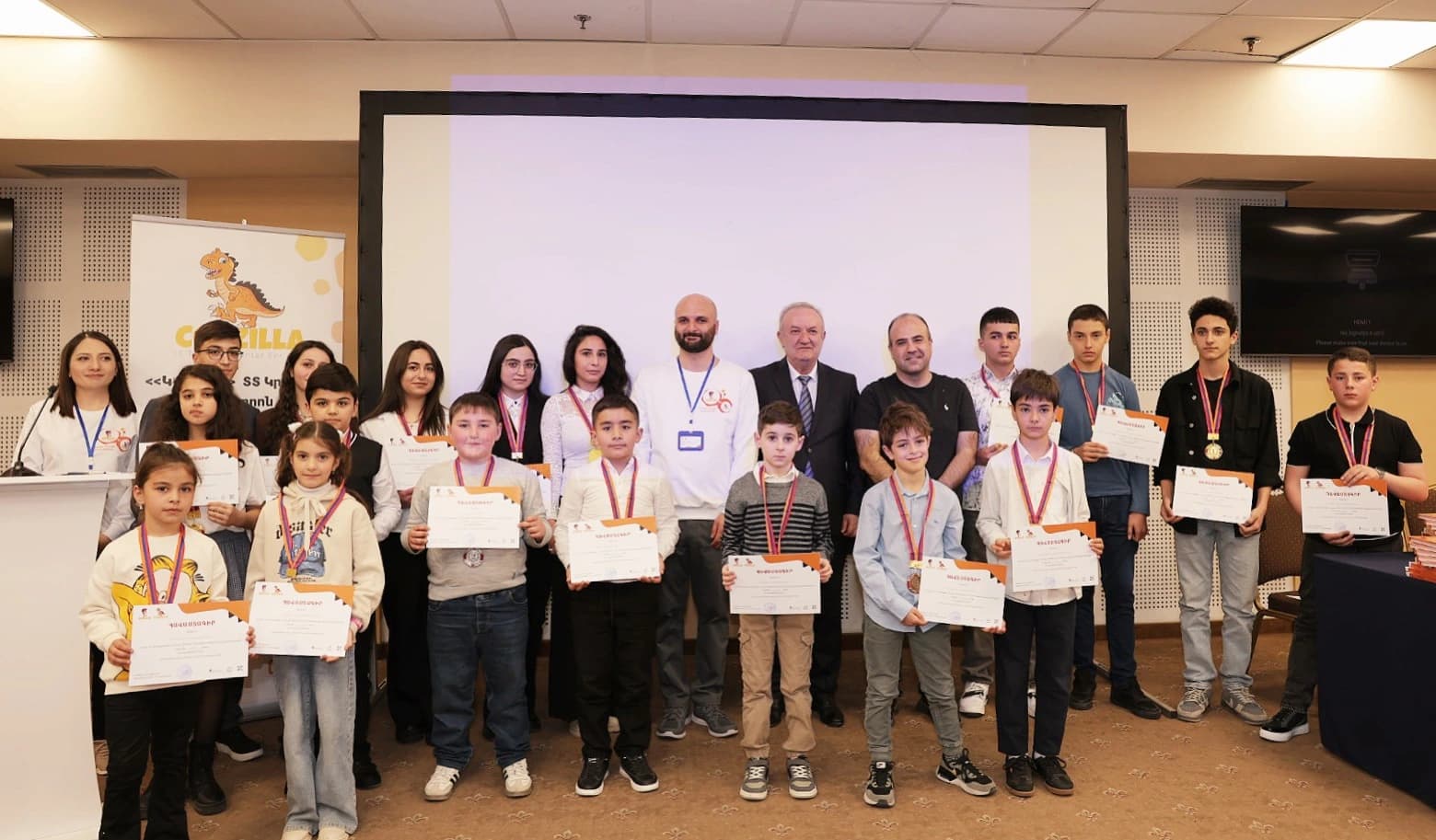
Three schools, different equipment, and the same November challenge period. Together, these photographs show the experience, from working through the problems to receiving a certificate afterwards. They are ordinary moments, captured as they happened.
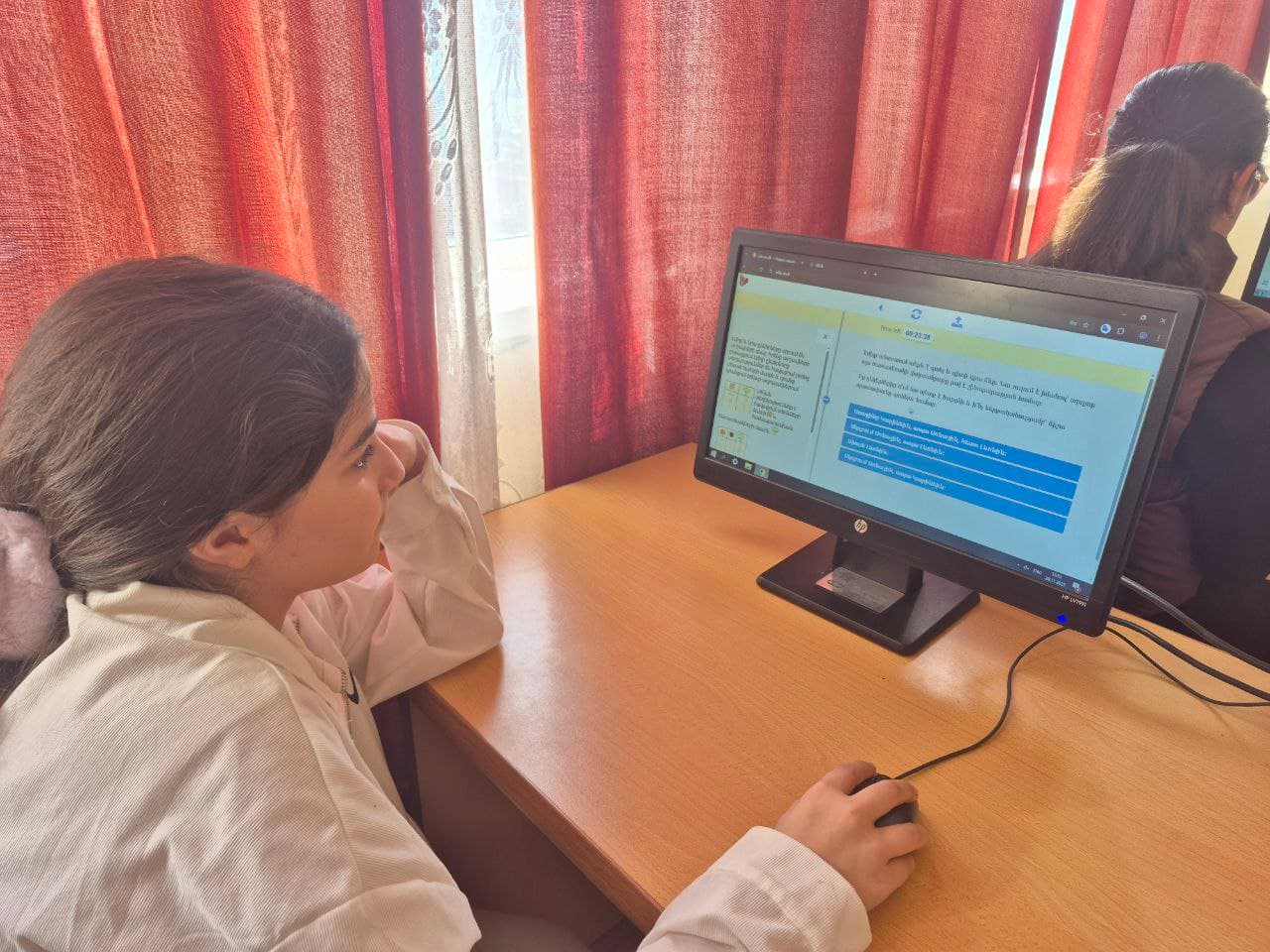
Noyemberyan College, November 2025. 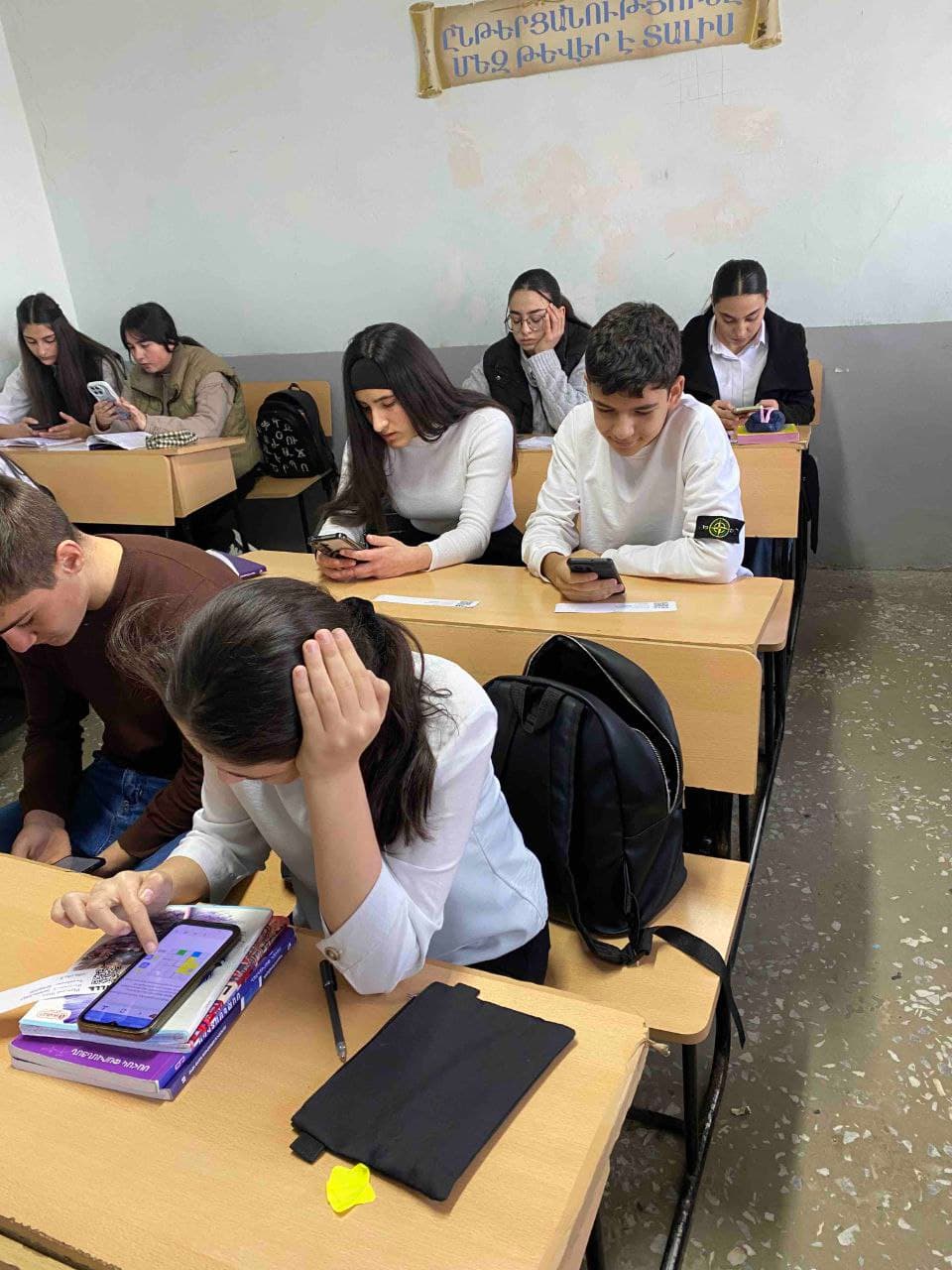
Gyumri Economic College, November 2025. Where there is no computer room, the phones are the computer room. 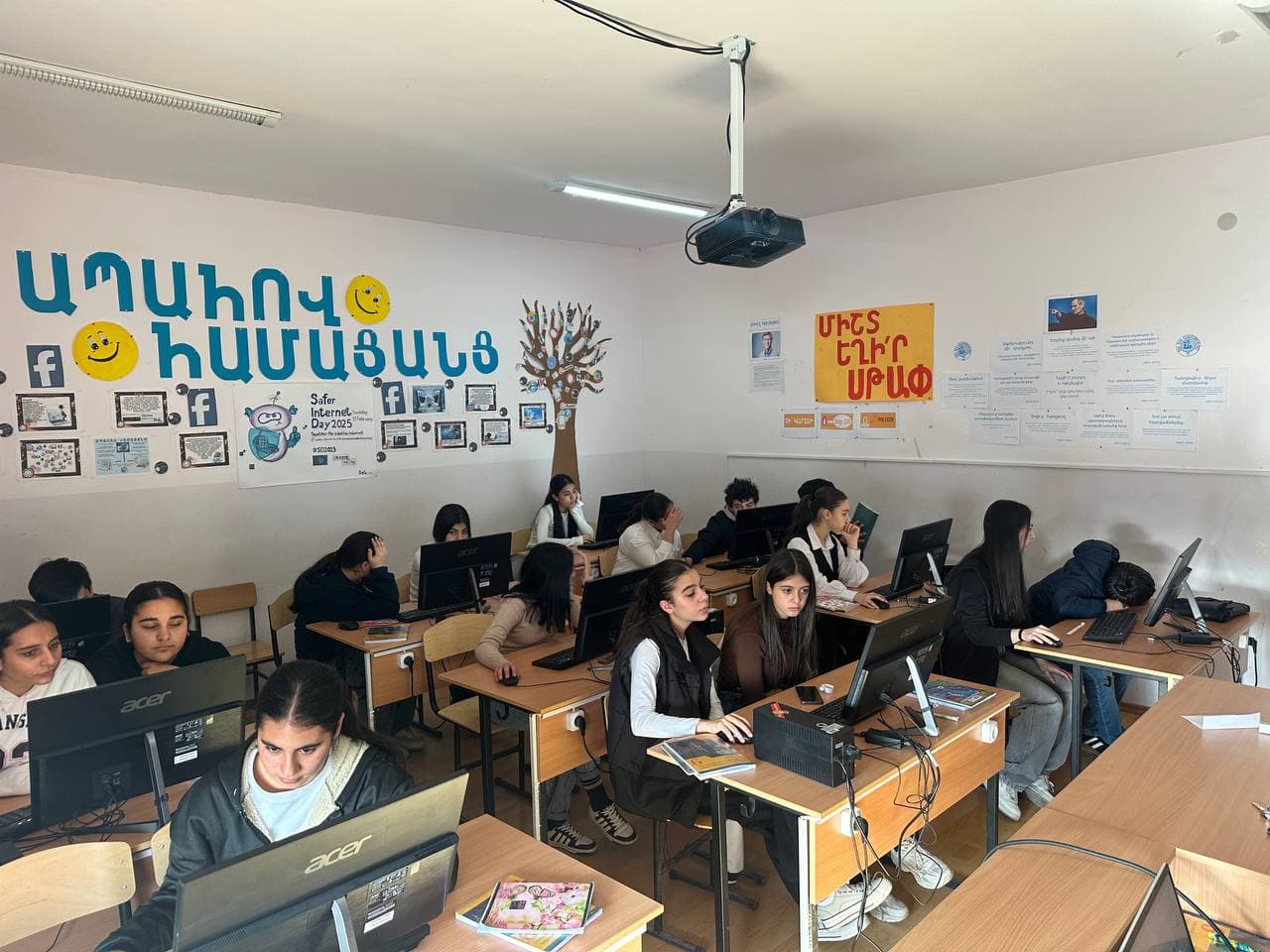
Nor Geghi Secondary School No. 1, November 2025.
How the challenge works
The challenge runs through the school, once a year, on a set day.
- 01
A school registers
A teacher registers the school at bebras.am and enters the pupils who will take part.
- 02
Pupils sit the challenge
On the challenge day pupils answer a set of short tasks online, at school, in their own age group.
- 03
Results and certificates
Every participant receives a certificate, and the strongest results are recognised.
The format
- Prior coding
- None. No language, no syntax, no setup.
- Where
- At school, answered online.
- Age groups
- A separate set of tasks for each age group.
- How often
- Once a year.
What a participant actually meets
Not an exam. A set of short puzzles, each one a small story: a machine that follows instructions, a pattern to continue, a route to choose, a message written in symbols. The computer science sits inside the story, and a child can answer without knowing that is what they are doing.
- Each task stands alone
- Getting one wrong does not close the next one. A child who stalls on one puzzle still meets all the rest.
- No code, no setup
- Nothing to install and nothing to memorise. The thinking is the kind you can do with a pencil; the answer is given on a screen.
- The whole class, not the club
- A teacher can enter a class rather than only the pupils who had already chosen informatics.
- Something in hand at the end
- Every participant receives a certificate with their own name on it.
Everyone finishes with something to show for it
A certificate for every participant
Every student who completes the challenge receives a digital certificate, regardless of their score. It is not reserved for the highest scorers. It recognises each child for taking on the challenge and seeing it through.
And some are printed
Some schools print them. Where a school does not, teachers have printed them at their own cost, so that a child has something to hold rather than a file to open. Nobody asks them to.
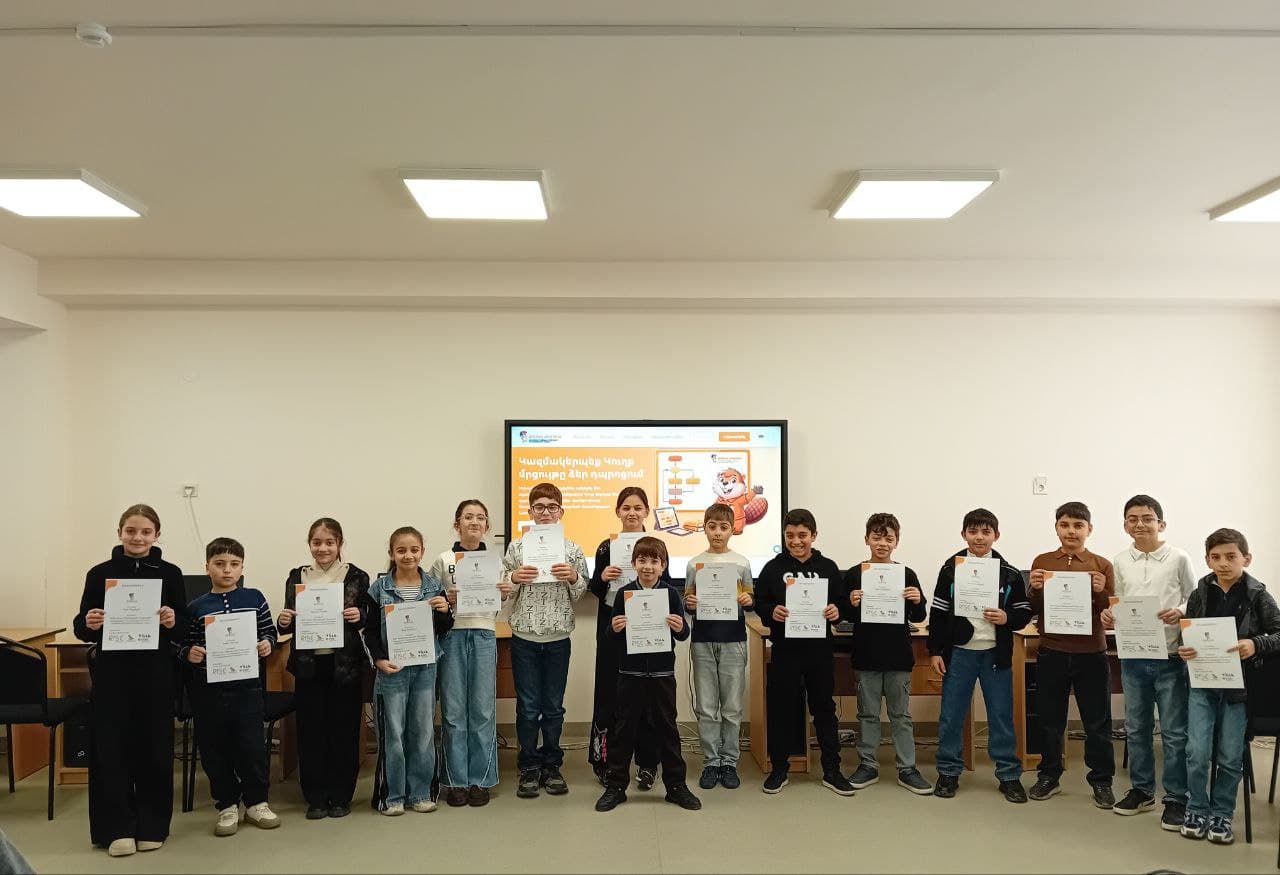
Certificates printed and handed out at the school itself, not only at the national ceremony. Goris High School No. 1 after Aksel Bakunts. 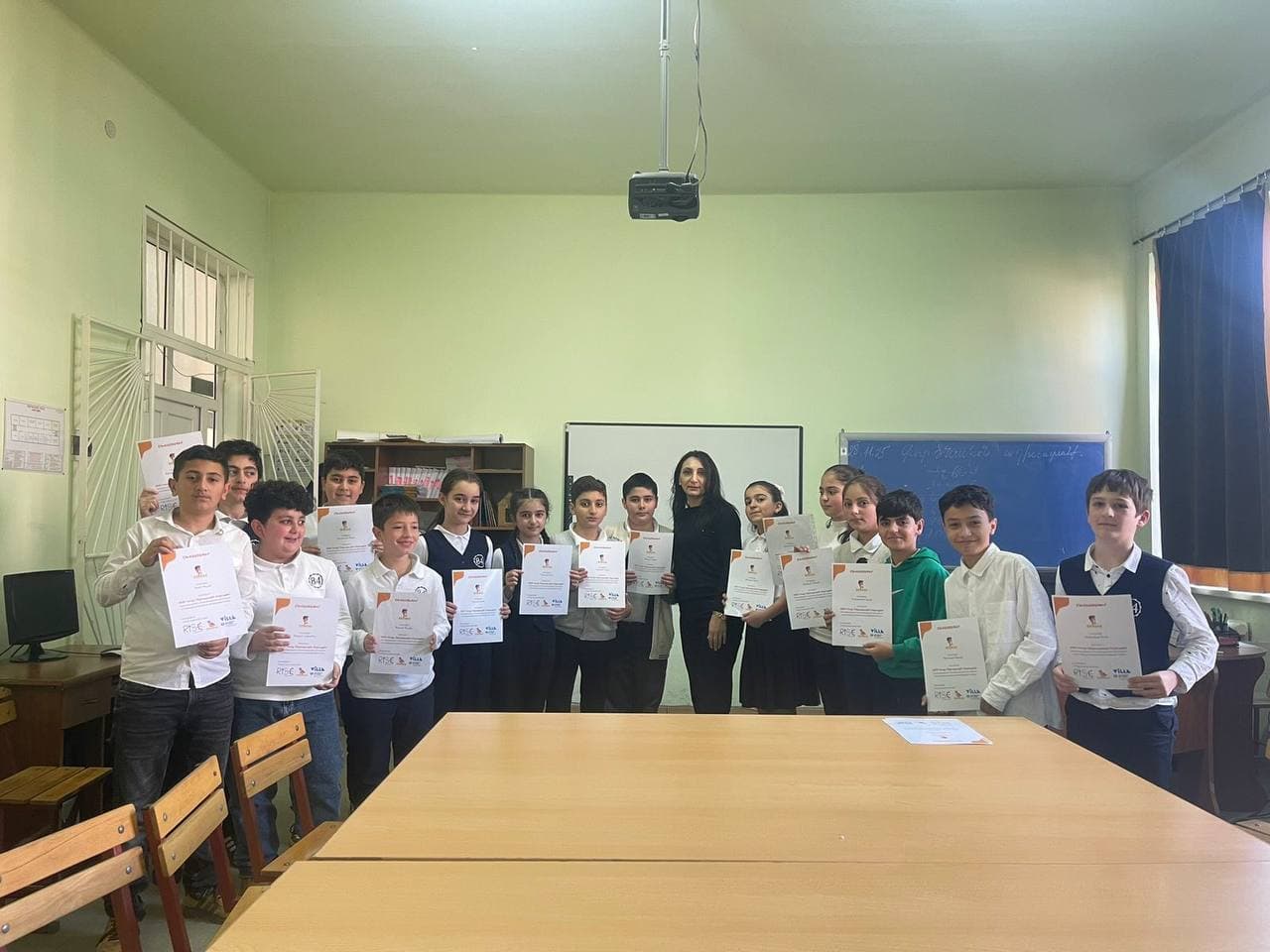
Khachatur Abovyan Basic School No. 84, with the teacher who ran the challenge. November 2025.
The record in Armenia
40 children in 10 schools in 2022, to 6,407 children in 60 schools in 2025.
| Year | Participants | Schools |
|---|---|---|
| 2022 | 40 The first Bebras Challenge held in Armenia. | 10 |
| 2023 | — No participation figure was published for 2023. | — |
| 2024 | 2,159 9 regions. | 37 |
| 2025 | 6,407 All regions of Armenia and Yerevan. | 60 |
Each column is scaled to its own largest figure. Participants and schools measure different things and are never drawn on one scale.
2023 keeps its row and stays empty. Nothing is estimated for that year and no line is drawn across the gap.
These are reach figures. They record how many children took part, not what they learned.
Source: figures published by Bebras Armenia, bebras.am.
The challenge worldwide
Bebras began in Lithuania and is now run by an association of member countries. Published figures differ from source to source, so every figure here carries the source it came from, and where sources disagree the more conservative one is printed.
2004
The first Bebras challenge was held in Lithuania, at the University of Vilnius, from an idea by Valentina Dagienė. The name is the Lithuanian word for beaver.
Participants worldwide
| Year | Participants |
|---|---|
| 2014 | 900,000+ More than 900,000 participants across 33 countries. Academic sources. |
| 2022 | ≈ 2,500,000 About 2.5 million participants worldwide. Wikipedia. |
Two readings, eight years apart, from two different sources. They are not a series, so no line is drawn between them.
Member countries today
| Membership | Countries |
|---|---|
| Full members | 72 |
| Provisional members | 23 |
| Member countries in total | 95 |
Source: Wikipedia.
In 2014, 33 countries ran the challenge (academic sources). Today about 95 countries belong to the association (Wikipedia). The two figures count different things, running the challenge in one year and holding membership, so they are not drawn on one scale.
Larger figures for Bebras circulate online without a clear source. They are not used on this page.
Where Armenia sits in the association
The team first applied to join Bebras in 2022 but was not accepted. They applied again in 2023, travelling to the workshop in Egypt, but the second application was also unsuccessful.
The third application was accepted at the 2024 workshop in Serbia. A year later, at Seoul National University, two tasks written in Armenia entered the official challenge pool for the first time in the competition’s 22-year history.
At the 2026 workshop in Cambridge, Armenia became a full member with 43 votes in favour. It formally joined the Bebras Association in August.
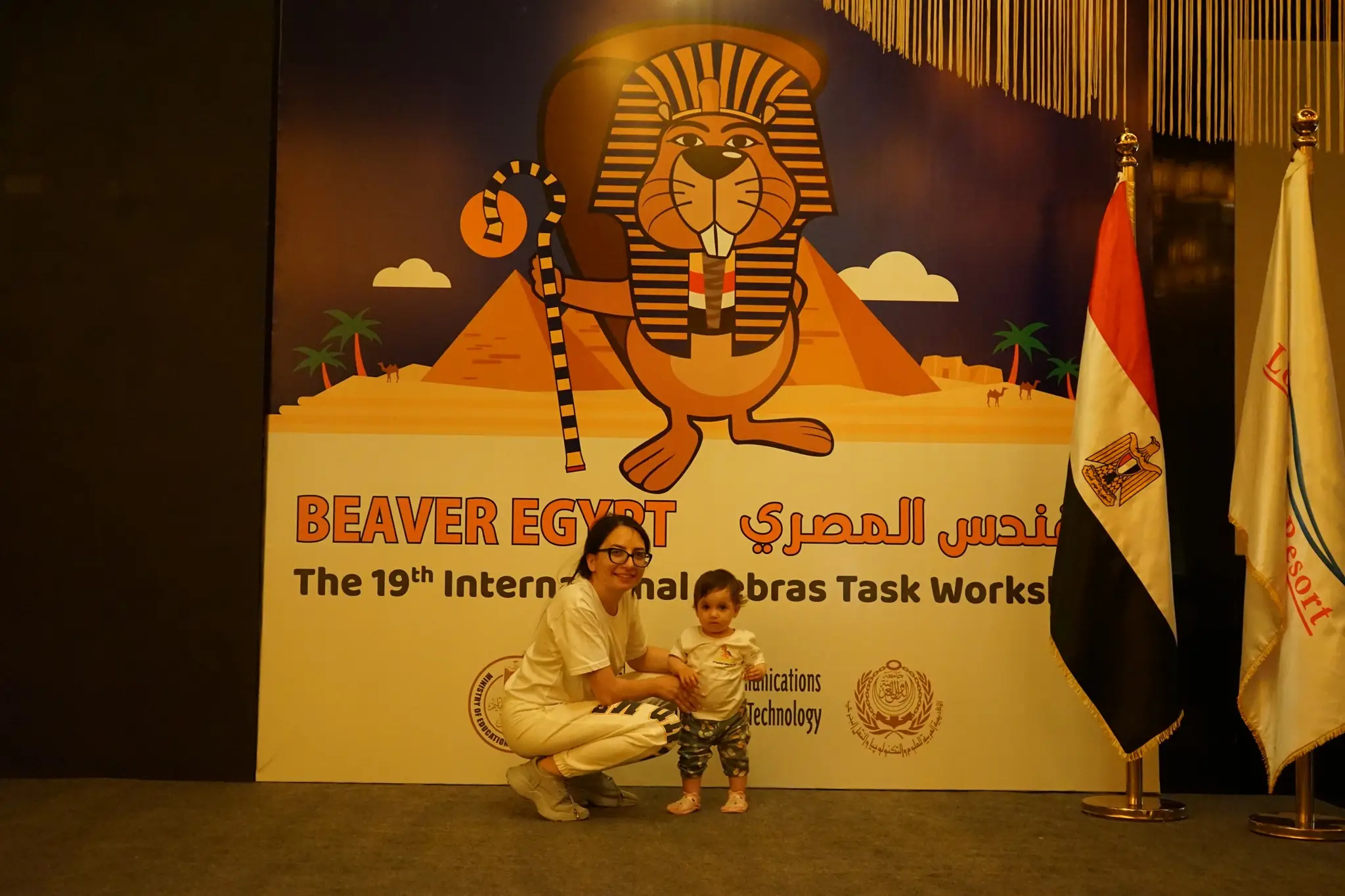
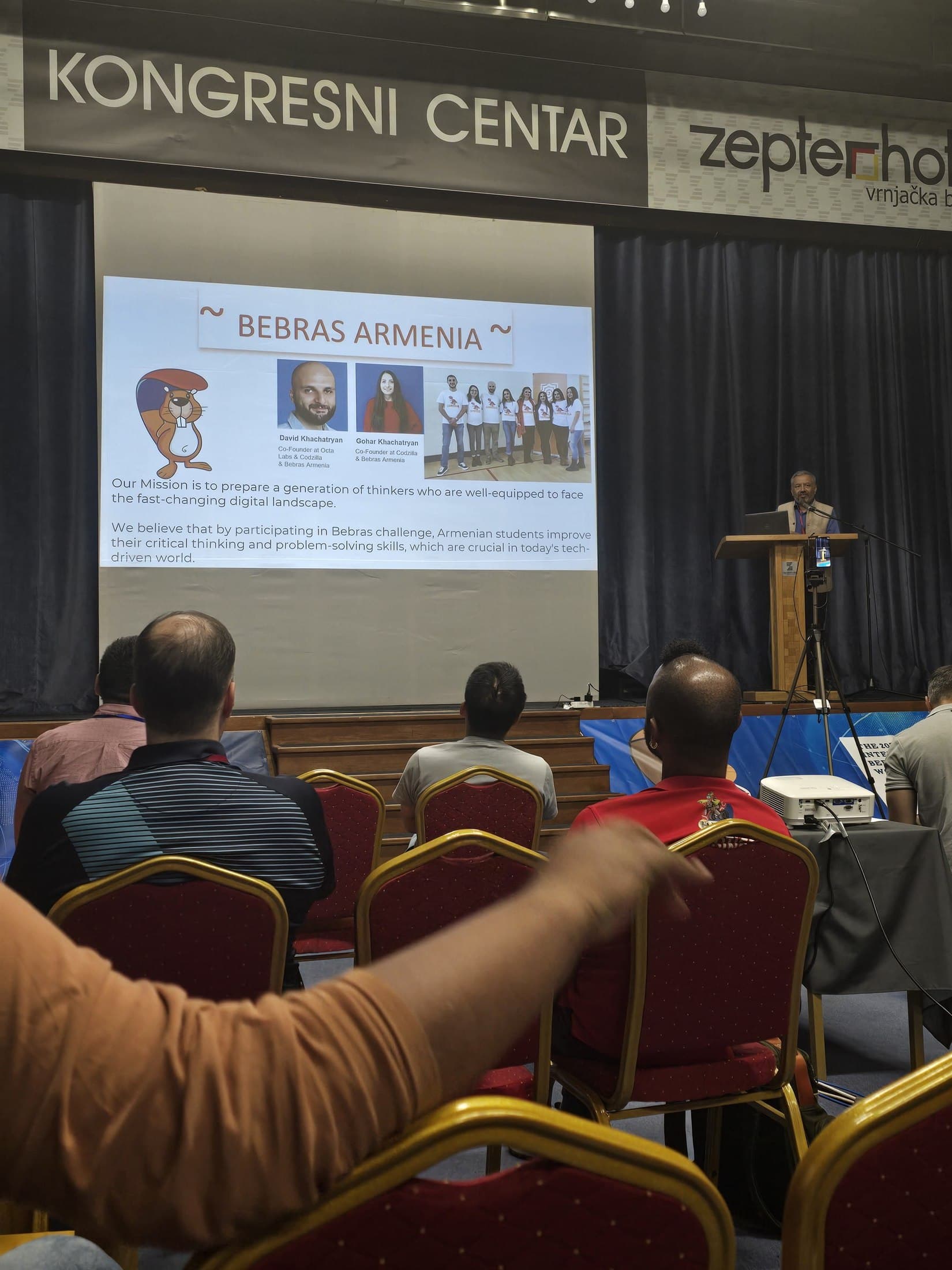
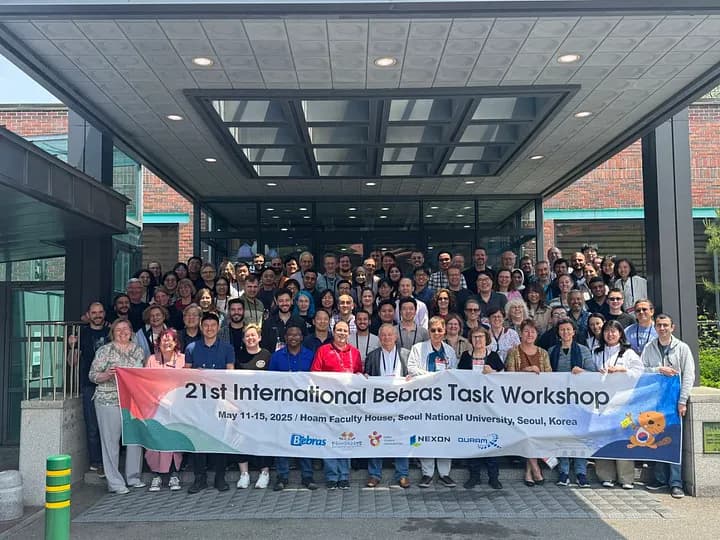
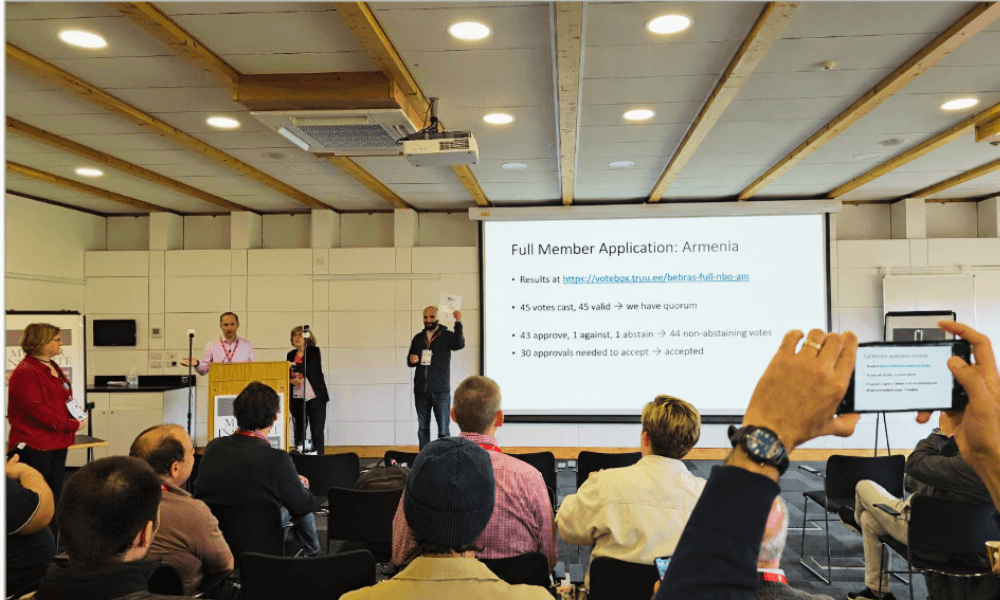
Membership figures: Wikipedia. Armenia's own membership record: RISE.
Who can take part
The challenge is entered through a school, and it is open far wider than the informatics group.
- School pupils, at every age
- Tasks are set in separate age groups, from the first years of school to the last, so every child answers questions written for their age.
- Schools in every region
- In 2025 the challenge reached 60 schools across all regions of Armenia and Yerevan.
- Teachers, as the way in
- Pupils take part through their school: a teacher registers the class and runs the challenge on the day.
- No prior informatics
- No programming and no earlier study of informatics is needed to answer the tasks.
The rooms it happens in
A city classroom, a village school, a school library. Wherever there is a screen, the same tasks arrive.
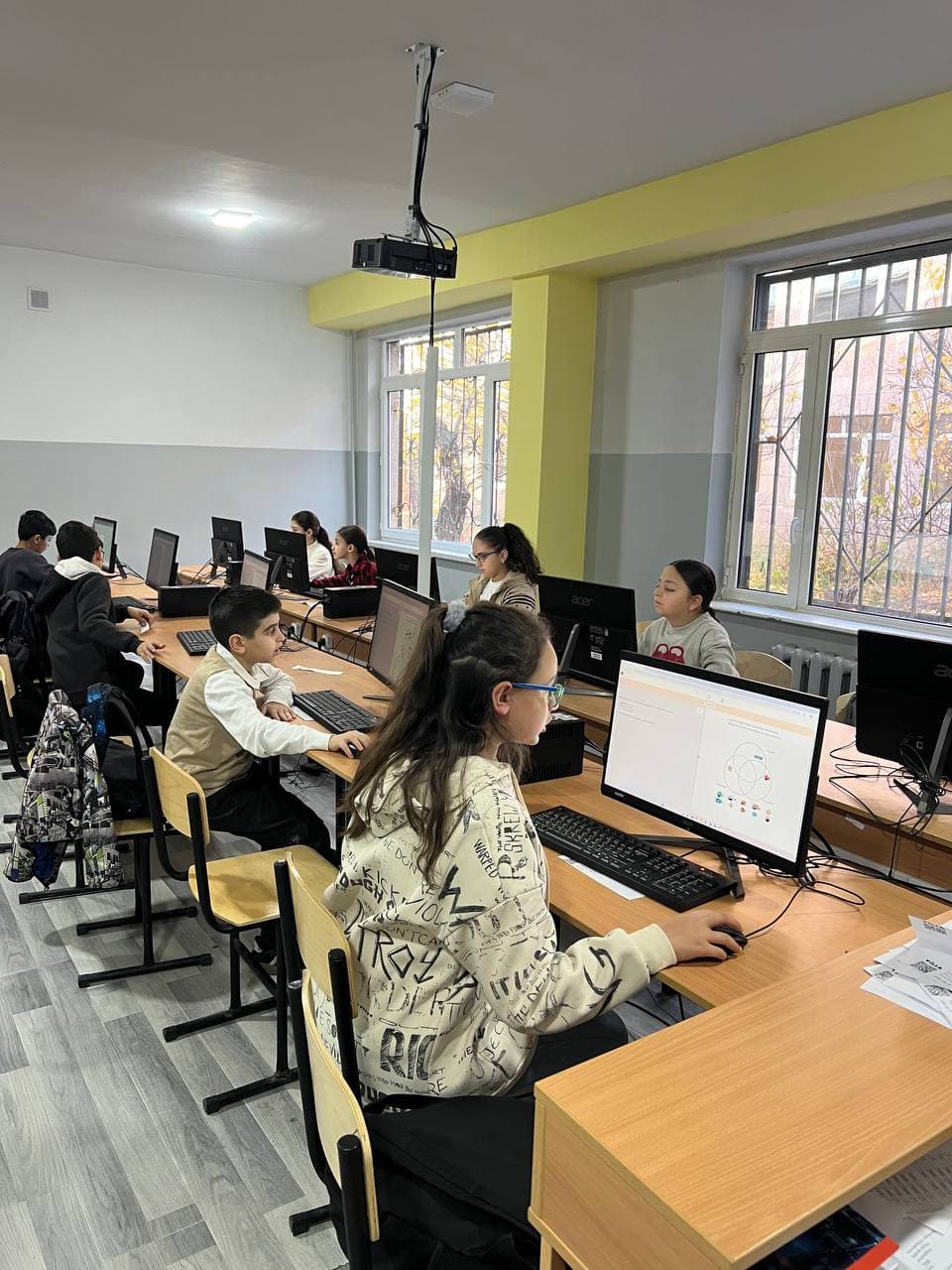
Abovyan Basic School No. 10 after V. Hambardzumyan, November 2025. 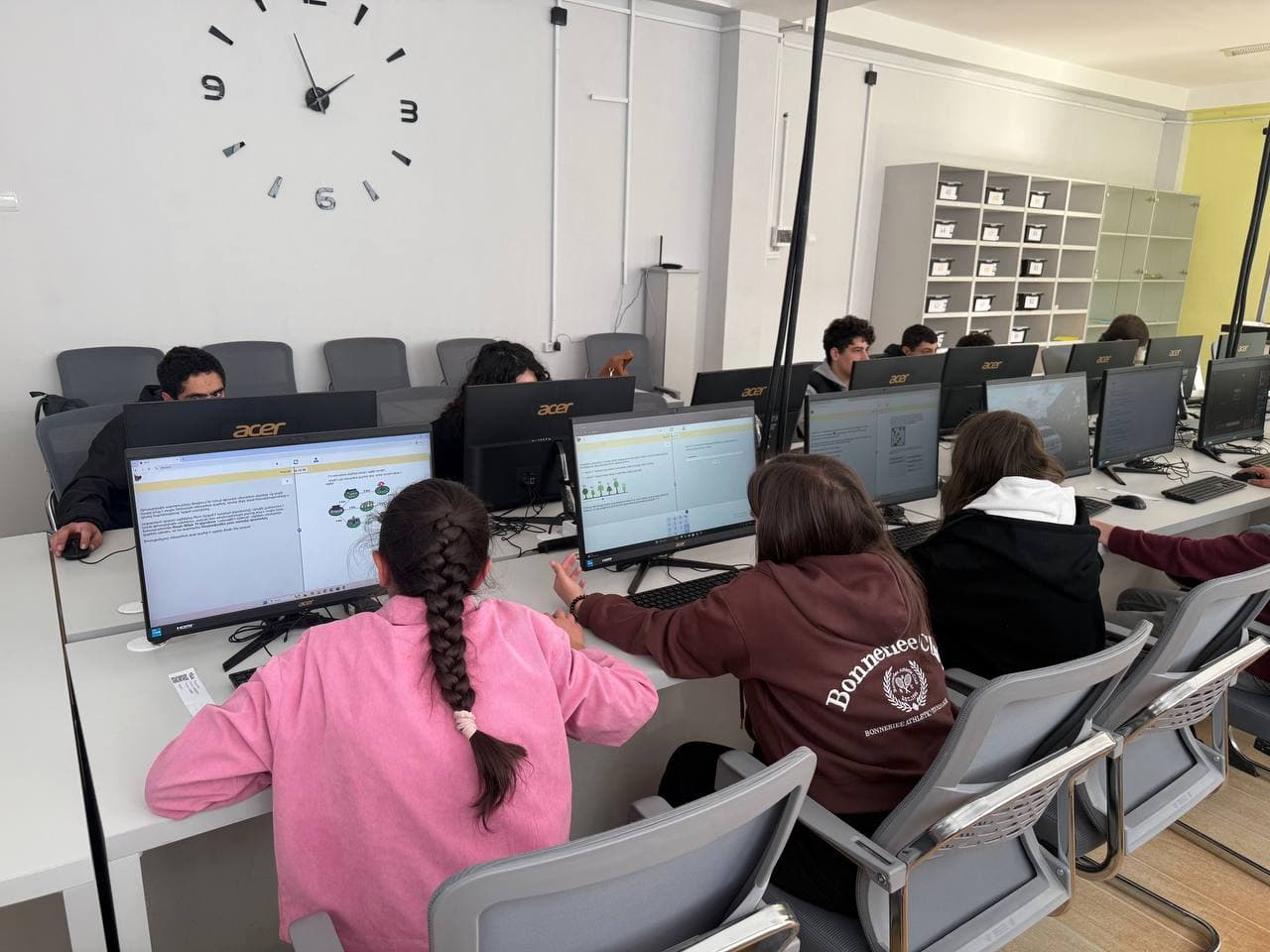
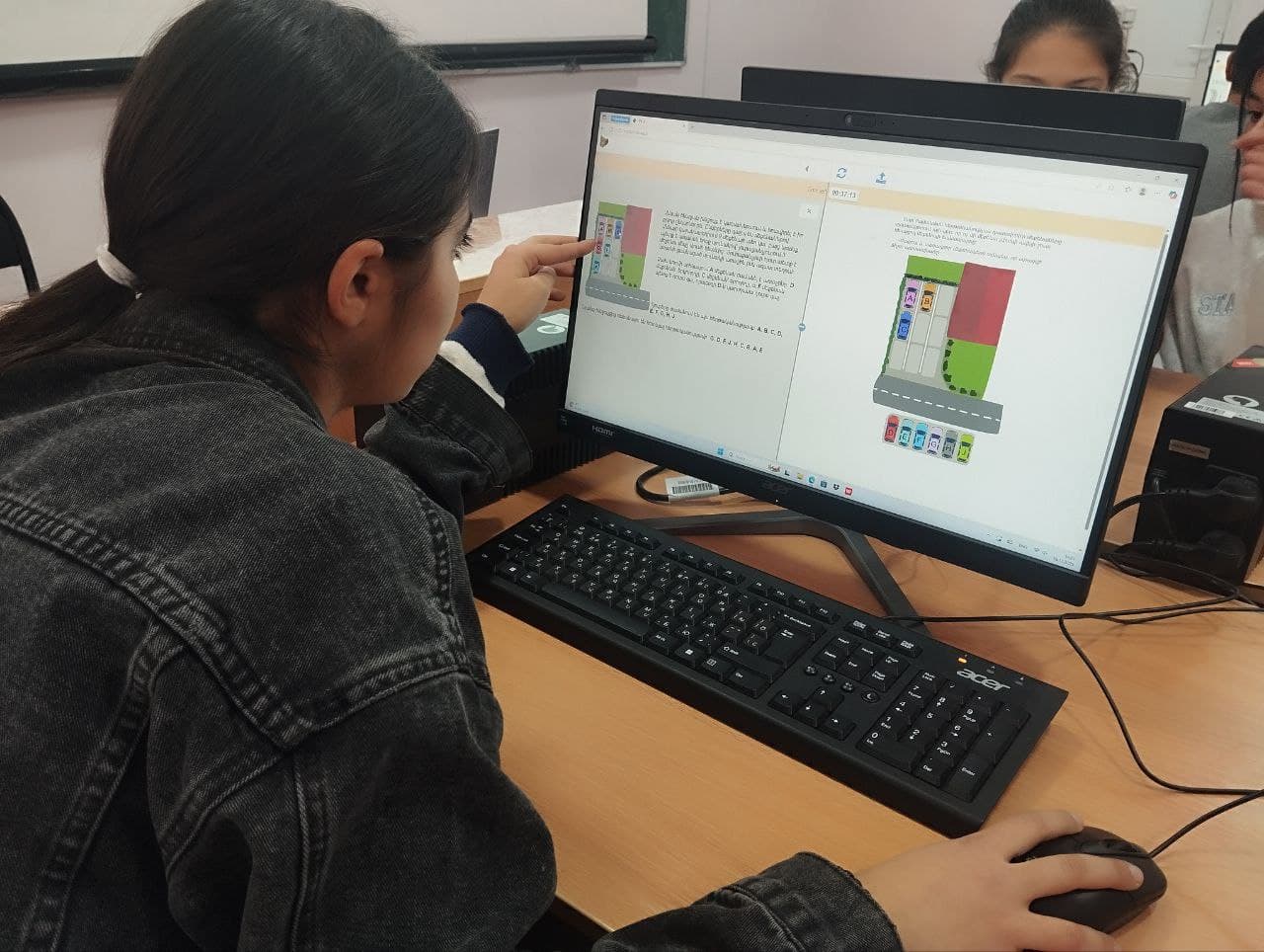
The computer room at Vanadzor NPUA Branch High School, November 2025. Two of the tasks are open on screen. 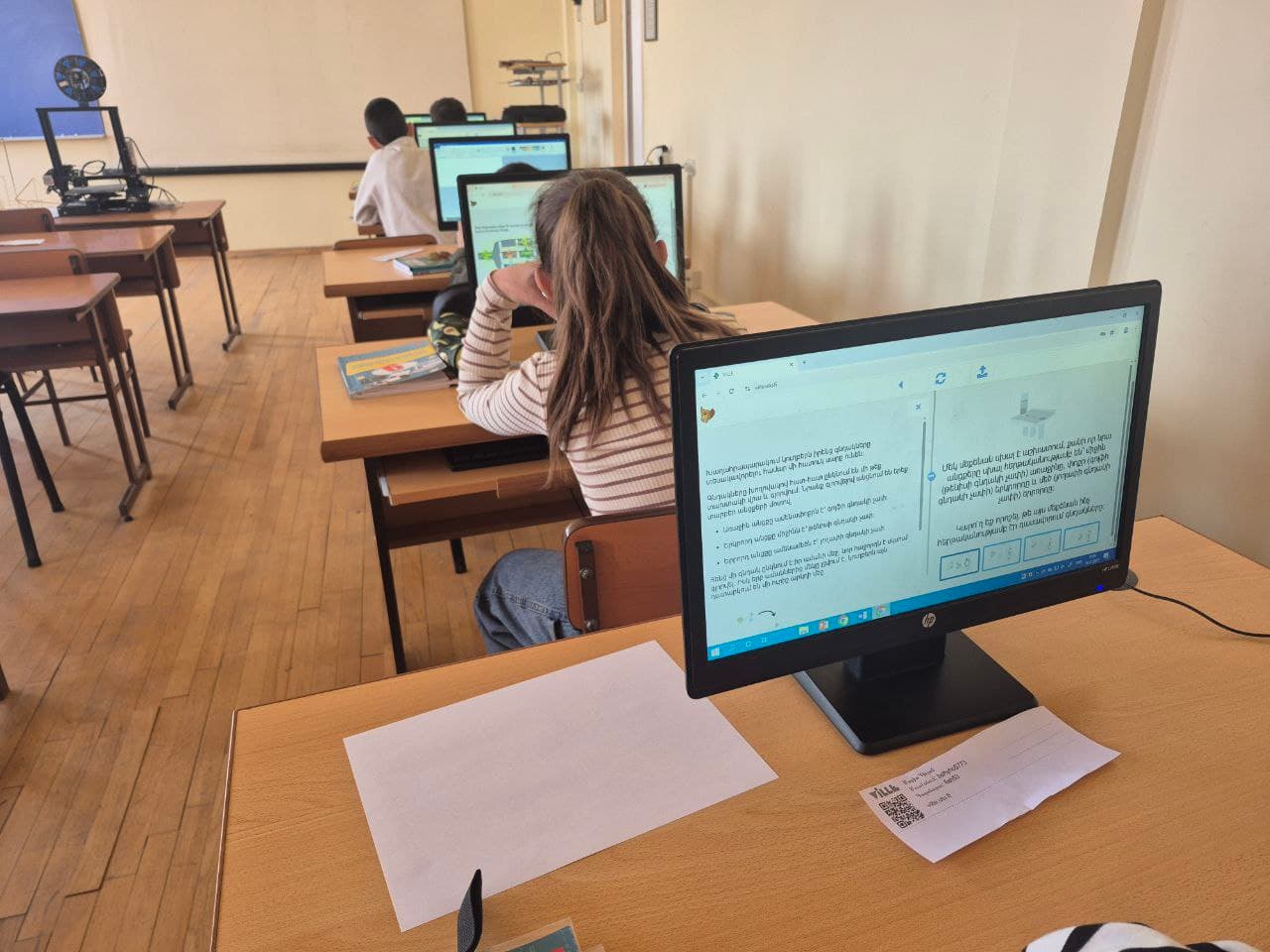
Noyemberyan College, November 2025. The task on the near screen, the blank sheet and the login slip are what a participant sits down to. 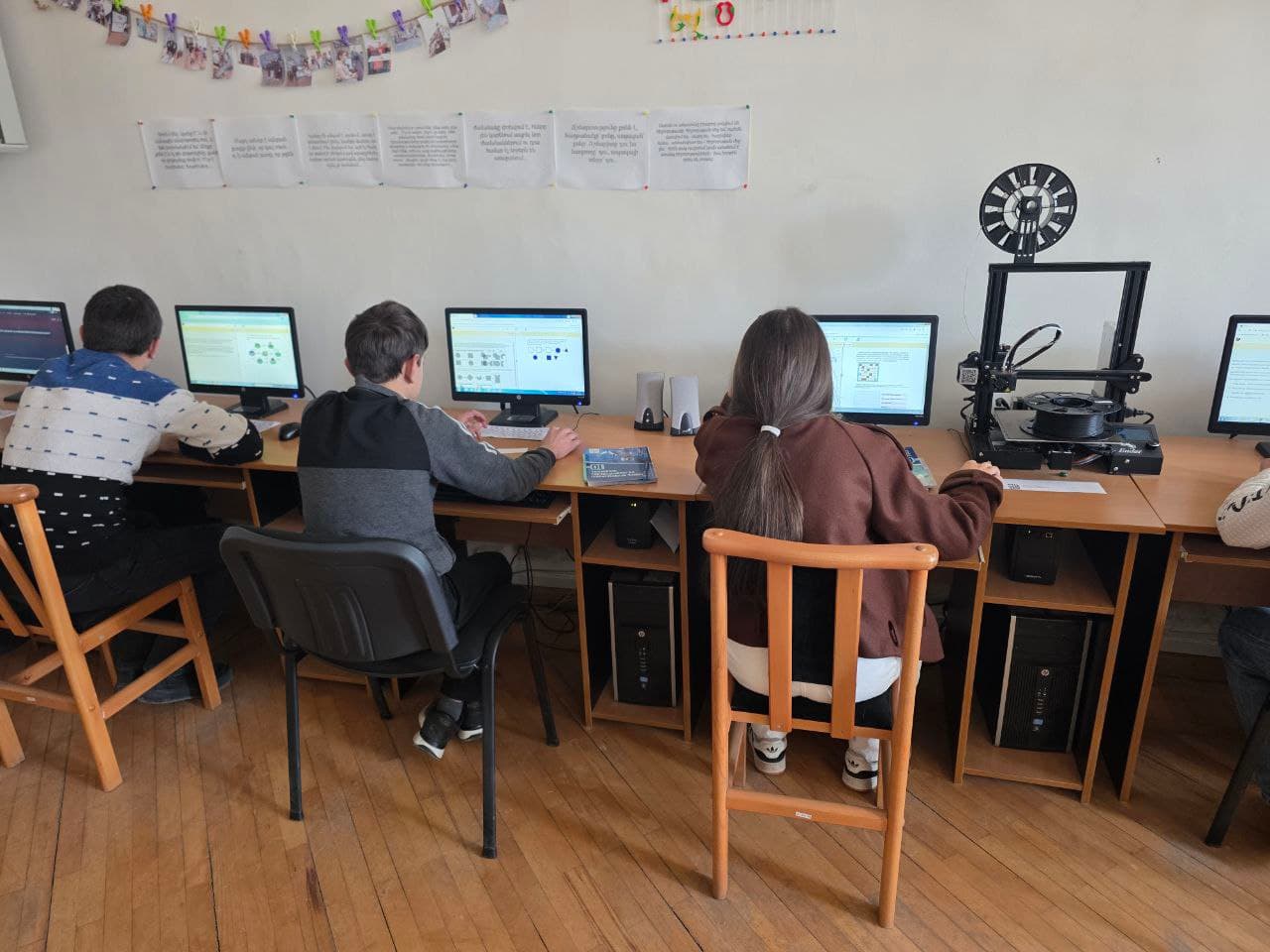
Gosh Secondary School, November 2025. 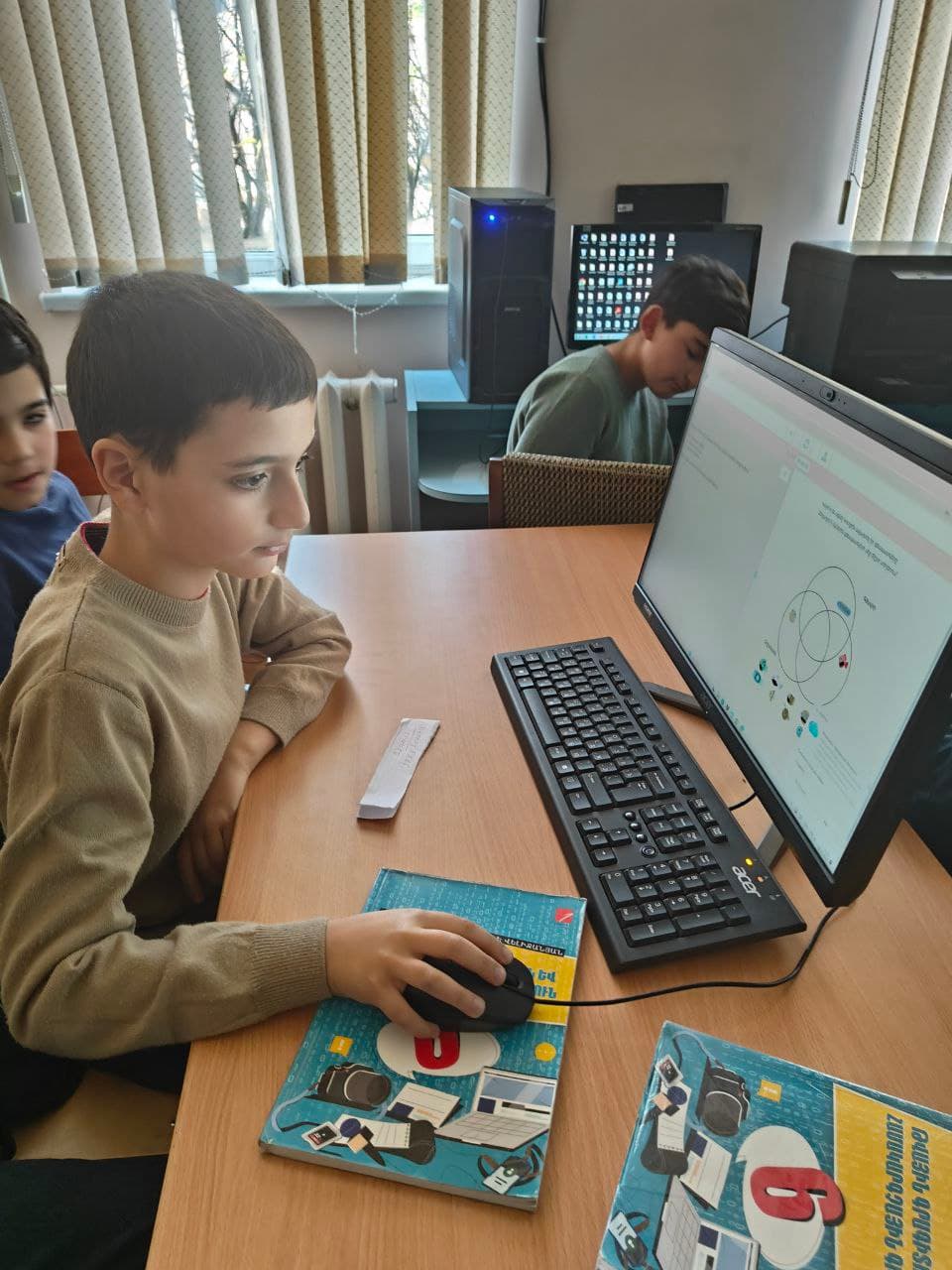
Gyumri Secondary School No. 25, November 2025. 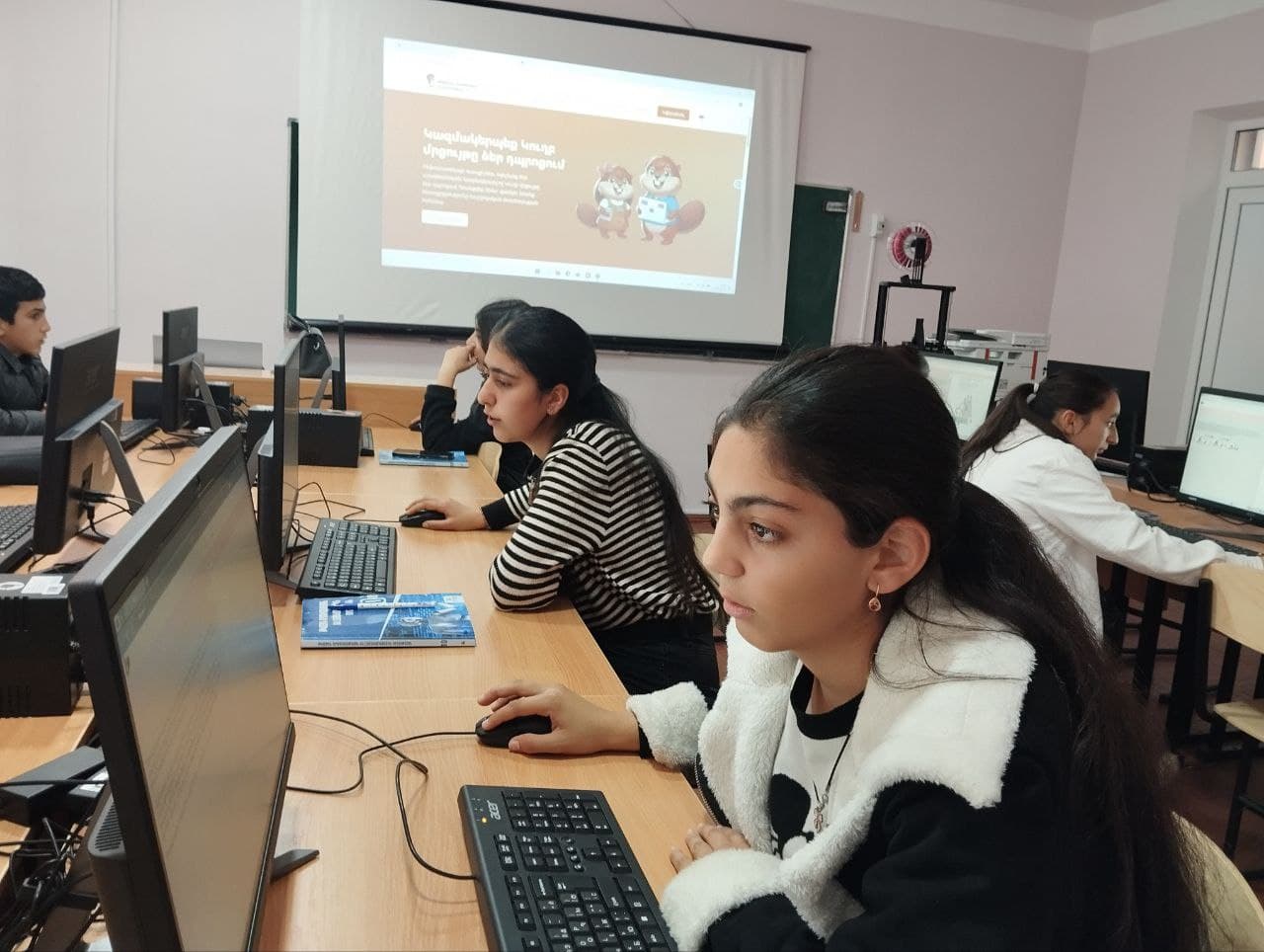
Saramej Secondary School, November 2025.
Films
The challenge, the ceremonies, and the international workshops.
bebras.am
Bring the challenge to your school
Registration and the dates of the next challenge are handled by Bebras Armenia on its own site.
Opens bebras.am in a new tab.
Individual participation and task books
Families can explore Bebras Online 2026, the paid individual online challenge, on RISE’s payment platform. Its participation conditions and fee are separate from the school route. Book purchases and entry fees support the foundation’s educational work; they are purchases, not donations.